
Decorative Garden Planters: 15 Outdoor Styling Ideas That Last
Decorative garden planters can do more than hold plants.
A well-chosen planter can frame an entryway, anchor a patio seating area, create privacy on a balcony, soften a blank wall or draw attention down a garden path. The planter itself becomes part of the design, while the planting brings seasonal change, colour and life.
The best decorative outdoor planters are chosen with both beauty and function in mind. They need to suit the available space, the plant's root system, drainage requirements, weather exposure and the way people move through the garden.
This guide explains how to select, style and care for decorative garden planters for patios, balconies, porches, paths and outdoor living spaces.
TL;DR
- Treat planters as focal points, not filler.
- Choose fewer, better-scaled outdoor planters instead of many unrelated small pots.
- Match the planter to the location: entry, patio, balcony, path, wall or garden corner.
- Prioritise drainage, root room, weather suitability and plant needs before decorative details.
- Group planters by related material, colour or form rather than buying identical pots.
- Use one statement planter or one coordinated cluster per garden zone.
- Keep walkways, door swings and maintenance routes clear.
- Build a long-term base with durable containers, then refresh planting seasonally.
What Are Decorative Garden Planters?
Decorative garden planters are outdoor containers selected for both plant-growing function and visual impact.
They may be used as:
- Patio garden planters
- Entryway garden planters
- Balcony planter decor
- Garden-path focal points
- Container garden displays
- Outdoor privacy screens
- Herb or edible garden containers
- Decorative outdoor planter groupings
- Garden accessories that frame seating, gates or walls
A planter can be a focal point in its own right. Garden Design describes containers as useful anchors that provide continuity even as surrounding plants change through the seasons.
The Gardenalia POTS Method
Use this decision framework before choosing a planter.
| Step | Question | What to consider |
|---|---|---|
| P — Purpose | What should this planter do? | Frame an entrance, soften paving, grow food, create privacy or mark a focal point |
| O — Outdoor conditions | What does the site receive? | Sun, shade, wind, rain, frost, reflected heat and foot traffic |
| T — Technical fit | Can the planter support healthy plants? | Drainage, root room, weight, potting mix and watering access |
| S — Style system | How will it relate to the rest of the garden? | Material, shape, colour, repetition and planting mood |
The Fifth-Season Rule
Before buying a decorative garden planter, ask:
- Will I still enjoy this after five seasons?
- Does it work when flowers are not in bloom?
- Is it proportionate to the space?
- Can it handle the local weather?
- Does it have reliable drainage?
- Is it easy to water, move, clean and maintain?
- Does it make the garden feel calmer rather than more crowded?
The Most Important Planter Rule: Start With Function
A decorative planter must still be a good growing environment.
Container plants can become waterlogged during wetter seasons, and their roots are more exposed to cold than plants growing in the ground. Good drainage and climate-appropriate care are essential.
Use a container with drainage holes or a practical drainage solution. Oregon State University Extension also recommends elevating pots slightly so they do not sit directly in standing water.
Use a quality container mix rather than garden soil. Garden soil can compact in containers, restricting drainage and airflow around roots.
15 Decorative Garden Planter Ideas
1. Frame a Front Door With Matching Planters
A pair of matching planters can make an entrance feel settled and welcoming.
Use this approach when the door is centred or the porch architecture is balanced. Choose containers with enough visual weight to feel intentional, then use planting that suits the light conditions at the entry.
A structured evergreen, compact shrub or foliage-led display can form the long-term base. Add seasonal colour only as a lighter layer.
Best for: front porches, entry paths, gates and formal garden entrances.
2. Use Asymmetrical Entryway Garden Planters on a Narrow Porch
A narrow porch does not always need matching pots.
Use one larger decorative planter on the wider side of the door, then balance it with a smaller pot, lantern or wall feature on the opposite side. This gives the entrance personality without squeezing the doorway or blocking steps.
Best for: townhouses, compact porches, apartment entrances and off-centre doors.
3. Put One Statement Planter at the End of a Path
A statement planter can create a visual destination at the end of a garden path, side yard or patio route.
Garden Design recommends containers as focal points at the end of paths or as centrepieces in garden areas. It also advises choosing a focal feature that is appropriate to the space and visible from meaningful viewpoints.
Use a bold form, a distinctive finish or one structural plant. Keep the surrounding area quieter so the planter remains the main point of interest.
Best for: side gardens, courtyards, paths and garden-room transitions.
4. Create a Three-Height Patio Planter Group
A grouped display usually looks more intentional than pots scattered around a patio.
Choose:
- One taller planter for height
- One medium container for fullness
- One lower pot for trailing or softer planting
Use related materials or colours, but avoid making every planter identical. The difference in height creates depth, while repetition makes the group feel connected.
Best for: patios, decks, outdoor dining areas and courtyard corners.
5. Anchor a Patio Seating Area With One Large Planter
A large planter can make a patio seating zone feel more like an outdoor room.
Place it at the edge of the seating arrangement, beside a chair, near a bench or at the corner of an outdoor rug. Avoid placing it in the middle of circulation routes.
A planter can create structure in the same way as a small table, lamp or sideboard does indoors: it gives the eye somewhere to land.
Best for: patios, garden rooms, lounge corners and outdoor reading areas.
6. Use a Small Tree or Structural Shrub as a Living Focal Point
A larger decorative planter can support a small tree, clipped shrub or architectural foliage plant.
This approach works especially well where you need height without building a permanent structure. The container should be selected for the mature plant, not just the nursery pot it arrives in.
RHS notes that many shrubs, trees, climbers, herbaceous perennials and bulbs can be grown successfully in containers when the right conditions are provided.
Best for: patios, front entries, balconies, courtyards and garden corners.
7. Create a Decorative Herb-Garden Cluster
Herb planters can be both useful and beautiful.
Group a few containers near a kitchen door, barbecue area or patio dining space. Choose one visual direction: terracotta and weathered metal, matte black and green foliage, or pale ceramic with aromatic herbs.
Keep the layout practical. You should be able to water, harvest and clean around each pot without moving a decorative display every time.
Best for: kitchen gardens, patios, balconies and outdoor dining areas.
8. Pair Outdoor Planters With a Wall Feature
A planter group can ground a blank wall, fence or shed feature.
Place a decorative planter cluster below a trellis, metal wall accent, garden sign or outdoor artwork. Keep enough blank wall visible so the composition does not feel crowded.
This is especially useful in compact gardens, where vertical space can add interest without taking over the floor area.
Best for: patio walls, shed walls, courtyard boundaries and balconies.
9. Build a Balcony Planter Display Vertically
Balcony planter decor should use height carefully.
Use a slim vertical planter, railing planter, wall-mounted system or one tall container with planting that grows upward and outward. Secure every item for wind and follow building rules before attaching anything to a balcony rail or wall.
Container gardening can make practical use of patios, balconies and doorsteps where in-ground soil is unavailable.
Best for: apartment balconies, terraces and compact outdoor spaces.
10. Use Planters to Create Patio Privacy
Tall decorative planters can help create a softer edge around a patio or balcony.
Use repeated containers with taller, climate-suitable planting to screen a view without building a solid barrier. Keep enough room between planters for airflow, maintenance and access.
This approach works best when the containers are part of one coordinated design rather than a collection of unrelated pots.
Best for: urban patios, overlooked terraces and balcony boundaries.
11. Brighten a Shade Corner With Foliage-Led Containers
A shaded corner does not need bright flowers to feel decorative.
Use planters with strong foliage, varied leaf size, textured forms and a restrained palette. A single larger container may be more effective than several small flowering pots that struggle in low light.
Always choose plants according to the actual light available. Plant labels and local growing guidance are more useful than copying a planter recipe from a different climate.
Best for: north-facing patios, covered porches, shaded entries and under-tree spaces.
12. Create a Courtyard Vignette With One Large Bowl or Urn
Courtyards often look best with one complete composition rather than many small planters.
Try:
- One substantial urn, bowl or wide planter
- Two taller supporting containers
- One lower trailing planter
- A seat, lantern or wall feature nearby
This creates a finished outdoor vignette while preserving the calm, open space that small courtyards need.
Best for: enclosed patios, small courtyards and garden-room corners.
13. Use Decorative Planters to Soften Hard Paving
Planters are especially useful where paving dominates.
Place containers at transitions: beside a step, near a change in paving, beside a wall, at the corner of a deck or near an outdoor dining area. Let planting soften hard edges and lead the eye into the garden.
Avoid lining pots evenly around every edge. Use clusters and pauses instead.
Best for: decks, paved patios, courtyards and front paths.
14. Build a Seasonal Layer Around Permanent Containers
Choose long-lasting planters first, then refresh what grows inside them.
| Season | Planter styling direction |
|---|---|
| Spring | Bulbs, fresh foliage and early flowers |
| Summer | Flowering containers, herbs and trailing plants |
| Autumn | Grasses, seedheads, berries and warm foliage |
| Winter | Evergreens, structural stems and weather-ready accents |
A good planter stays useful all year. Only the planting and smaller decorative details need to change.
15. Add One Characterful Accent, Not a Collection
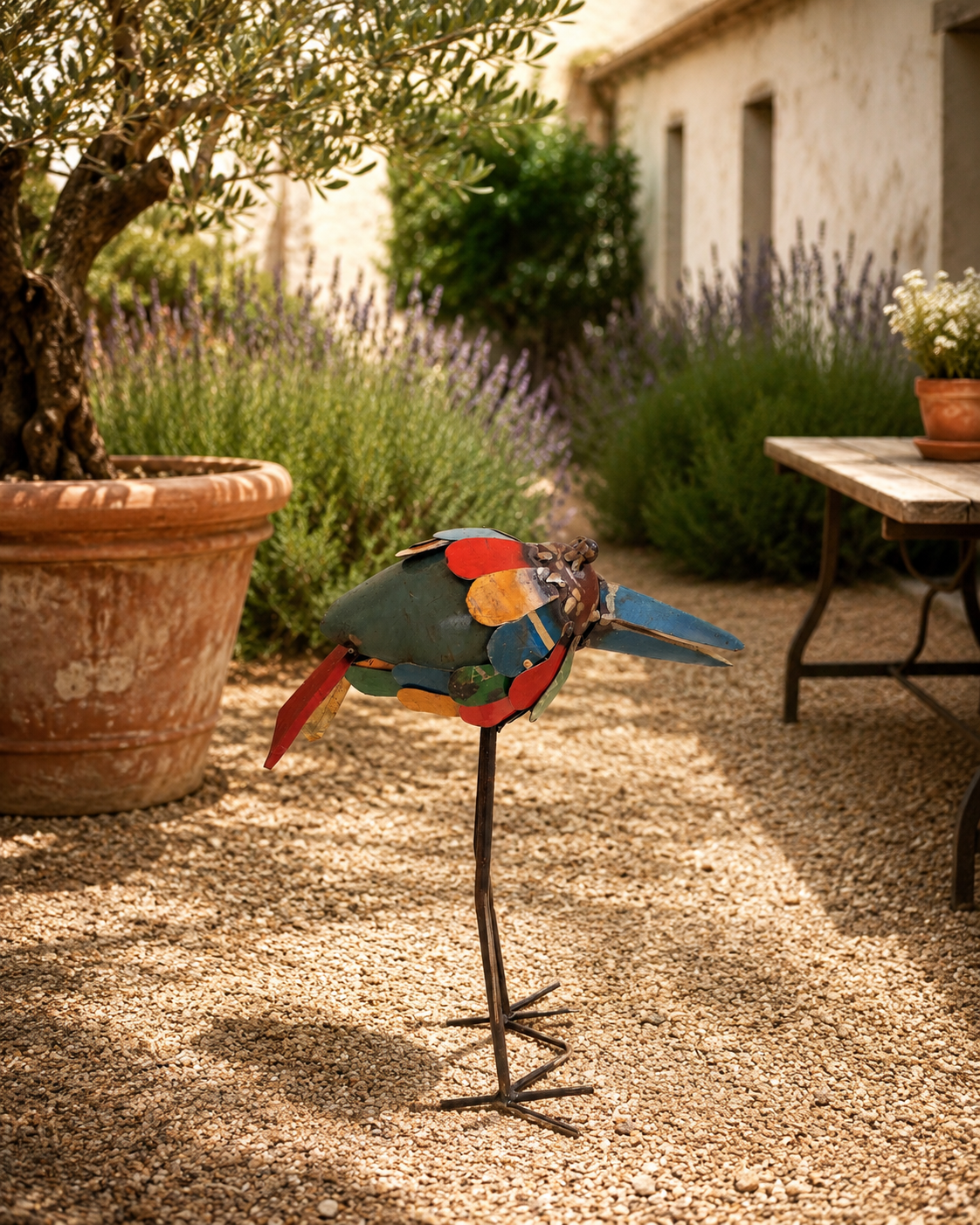
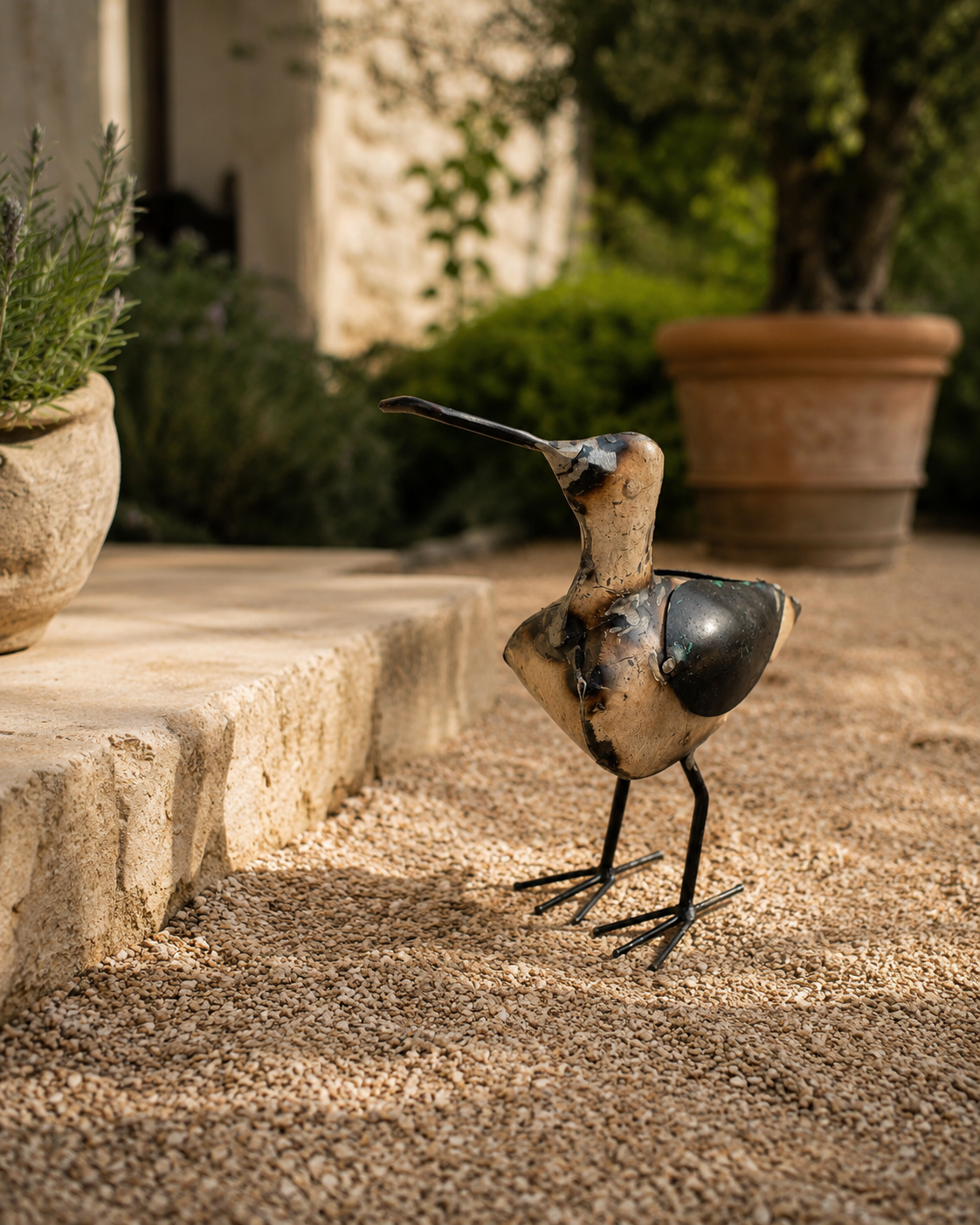
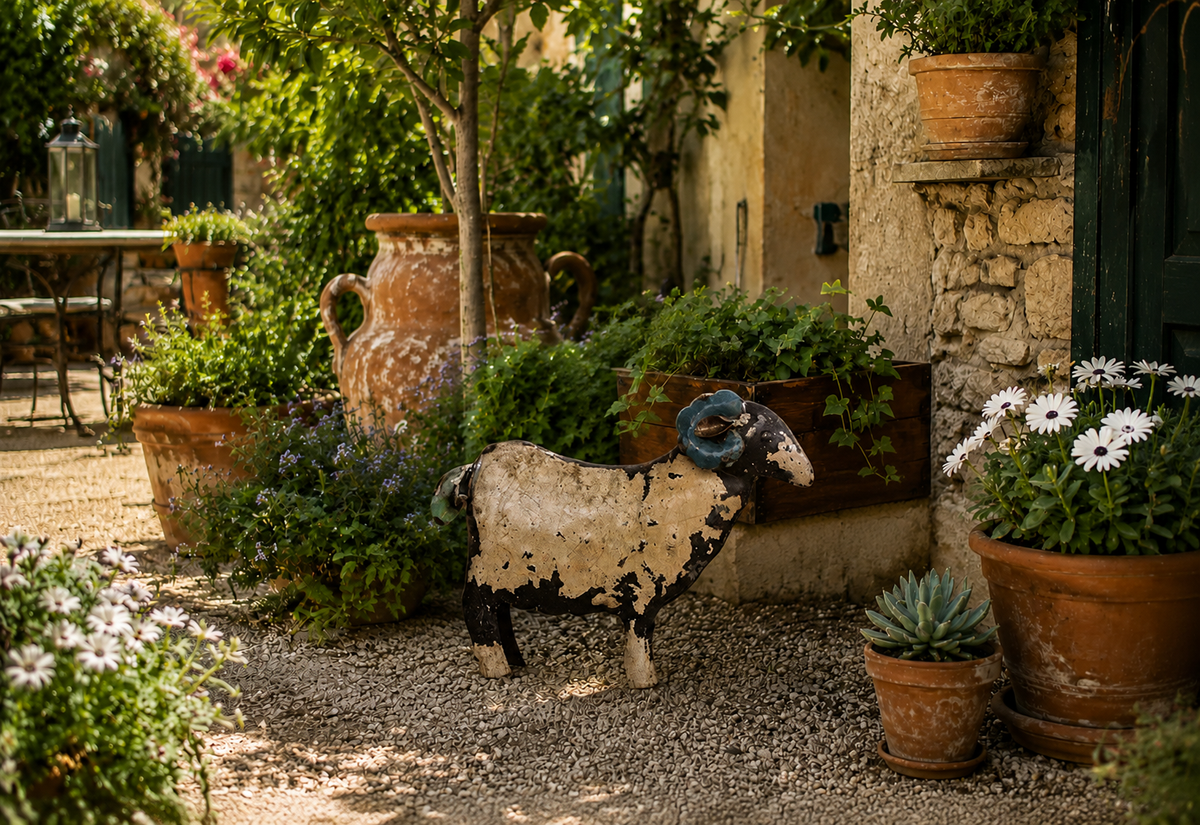
A decorative planter can be personalised with one subtle outdoor planter accent: a small metal bird, compact animal stake, garden bowl, handcrafted label or low sculpture.
Place the accent beside or within the planting, never in the middle of a path. The planter should remain the focal point; the accent simply adds a layer of personality.
Best for: Gardenalia-style patios, porches, herb corners and thoughtful garden gifts.
Decorative Garden Planters by Location
| Location | Best planter direction | Avoid |
|---|---|---|
| Front entry | Matching pair or balanced asymmetry | Blocking doors, steps or house numbers |
| Patio | Three-height group or large anchor planter | Scattering small pots across paving |
| Balcony | Slim, vertical or securely mounted options | Heavy, unstable or wind-prone displays |
| Garden path | One focal planter at a turning point or path end | Narrowing the walking route |
| Courtyard | One main urn or grouped focal composition | Filling every corner with containers |
| Kitchen garden | Useful herb and edible planters | Decorative clutter around harvesting areas |
| Shaded corner | Foliage-led containers | Sun-loving plants that will not thrive there |
How to Choose the Right Material
| Material | Best visual direction | Best setting | What to verify before buying |
|---|---|---|---|
| Terracotta | Cottage, Mediterranean, rustic | Herb gardens, patios, borders | Frost rating, drainage and weight |
| Glazed ceramic | Colourful, polished, expressive | Porches, entries, sheltered patios | Frost rating, drainage and secure placement |
| Metal | Modern, farmhouse, industrial or sculptural | Patios, wall-adjacent displays, balconies | Heat exposure, coating, drainage and rust runoff |
| Stone or cast stone | Formal, timeless, grounded | Paths, entrances and large garden corners | Weight, stable base and drainage |
| Composite or resin | Modern, adaptable, lighter-looking | Balconies, terraces and movable displays | UV rating, wind stability and drainage |
| Timber | Natural, rustic, productive | Herb gardens, raised planter areas and potting zones | Lining, drainage and seasonal maintenance |
Material Note
Do not choose a planter only because it looks right in a photograph. Check the product's drainage design, weight, frost suitability, intended outdoor use and care instructions before buying.
How to Plant a Decorative Outdoor Planter
1. Choose Plants for the Actual Conditions
Match planting to light, exposure and water availability. Oregon State University Extension advises matching container plants to sunlight and notes that container size should suit the root system of what is being grown.
2. Use Potting Mix, Not Garden Soil
Use a quality potting mix designed for containers. Garden soil can compact too much in pots and restrict drainage and root airflow.
3. Build a Simple Planting Structure
Use three roles:
- Vertical element: height or structure
- Body element: foliage, flowers or mass
- Trailing element: a softer edge that links the planter to the ground
Not every container needs all three. A single small tree or architectural plant can be enough for a modern planter.
4. Group Plants With Similar Conditions
Plants sharing one container should be suited to similar conditions, such as sun or shade and moist or relatively dry soil.
5. Water According to Weather, Not a Fixed Schedule
Container plants can dry quickly, particularly in heat and wind. Depending on container size and temperature, some may need watering more than once a day, while most prefer moist rather than soggy conditions.
Planter Care Checklist
- Confirm that every planted container drains properly.
- Raise outdoor pots slightly where necessary so water can escape.
- Check moisture regularly during heat, wind and dry periods.
- Water the soil rather than only wetting foliage.
- Use mulch on the surface where suitable to slow evaporation.
- Feed plants according to the product label and plant needs.
- Check for root crowding and repot plants when necessary.
- Protect containers and exposed roots in severe cold where required.
- Inspect painted, glazed and metal surfaces after harsh weather.
- Clean leaves, soil and trapped moisture from decorative details.
RHS notes that container roots are more exposed to cold than roots in the ground, while UMN Extension notes that container watering needs can increase sharply with temperature and pot size.
Expert Insight: Treat the Planter as the Focal Point
Garden Design recommends using containers as visual anchors at path endings, garden centres and side yards. It also advises grouping pots for stronger impact and using repeated shape, colour or texture to guide the eye through a landscape.
The practical lesson: use fewer, more purposeful decorative garden planters. Let each one do a job.
Case Study: Planters as Part of Outdoor Living
Houzz's 2026 U.S. outdoor-remodelling research found that 40% of homeowners undertaking outdoor projects added planters, while 62% added beds or borders and 38% upgraded patios or terraces. This is not a global consumer statistic, but it reinforces a useful principle: planters work best as part of a broader planted outdoor space, not as isolated decoration.
Common Decorative Planter Mistakes
Buying Too Many Small Pots
Small containers can quickly create visual noise and may need more frequent watering. Start with one statement planter or one grouped display.
Ignoring Drainage for the Sake of Appearance
An ornamental pot without a practical drainage solution can create root problems. Good drainage is non-negotiable for most planted outdoor containers.
Using Garden Soil in a Pot
Garden soil can drain poorly and compact in a container. Use a suitable potting mix instead.
Matching Every Planter Exactly
A garden can look more natural when planters share a finish, colour family or material but vary in height and shape.
Blocking Access
Decorative garden accessories should never compromise a doorway, path, balcony route, step or maintenance area.
Choosing Plants by Appearance Alone
A beautiful plant in the wrong light or container will not remain beautiful for long. Choose according to local climate, sunlight and care capacity.
Read more
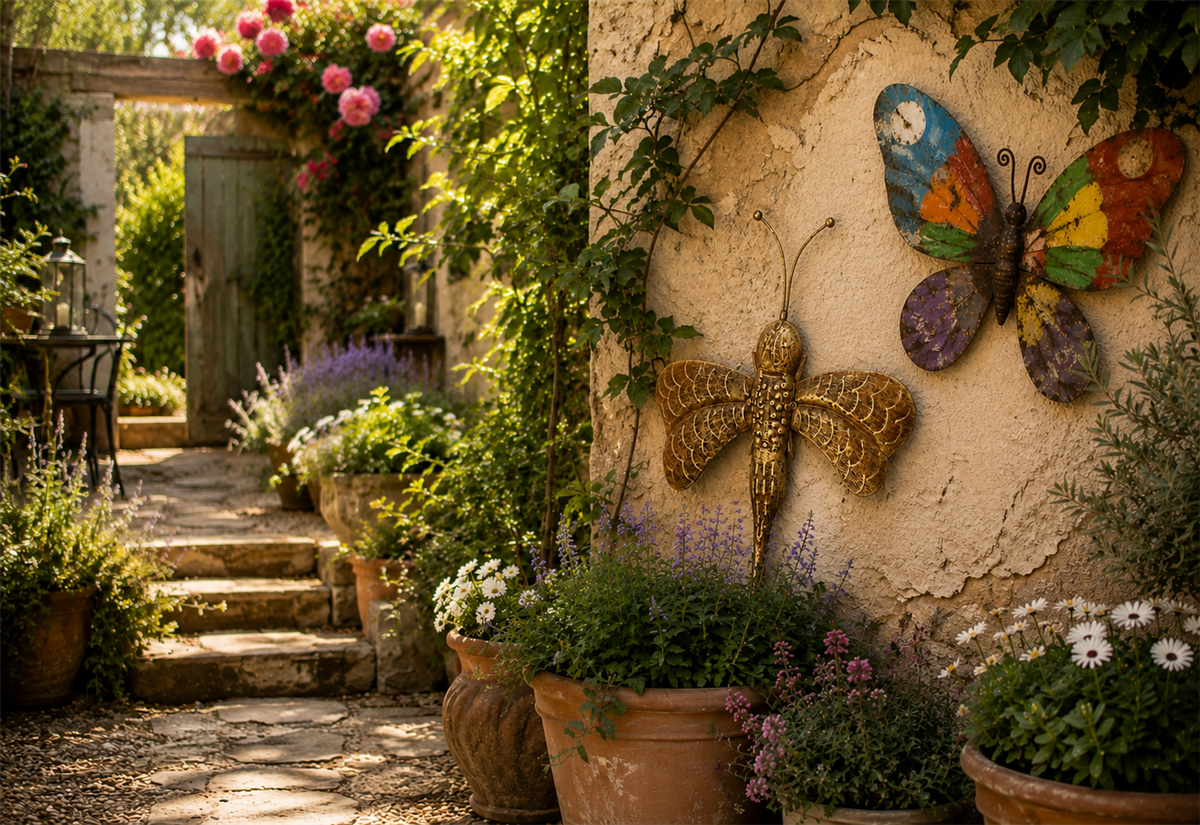
Butterfly Wall Decor: 15 Ideas for Gardens, Patios and Fences
Upgrade your outdoor walls with stunning butterfly decor. Discover expert placement ideas, styling secrets, and pollinator-friendly tips to create a beautiful, eye-catching garden that feels elegan...
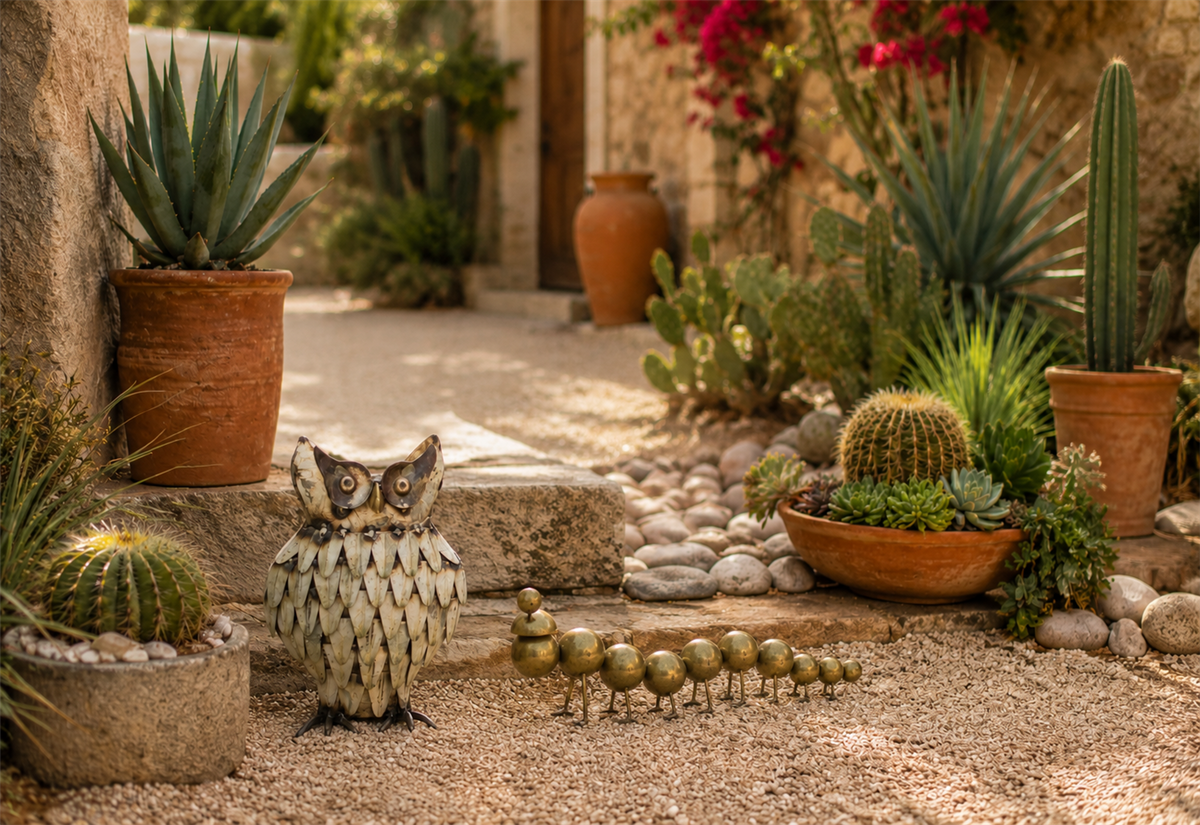
Cactus Garden Decor Ideas: 15 Desert-Inspired Outdoor Styling Ideas
Create a stunning desert-inspired garden with cactus decor. Discover expert styling ideas, climate-smart planting tips, and timeless design secrets to build a low-maintenance, eye-catching outdoor ...