
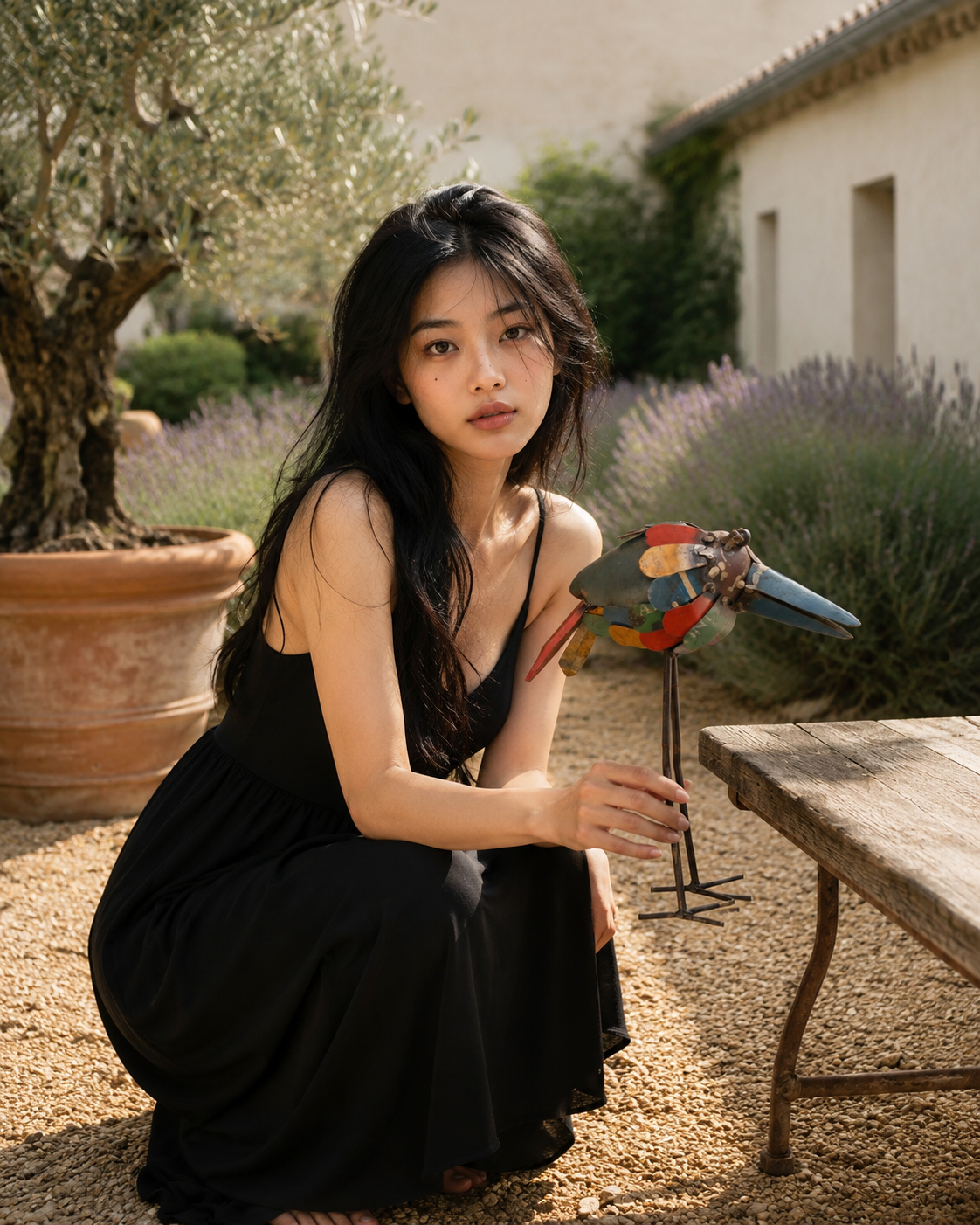
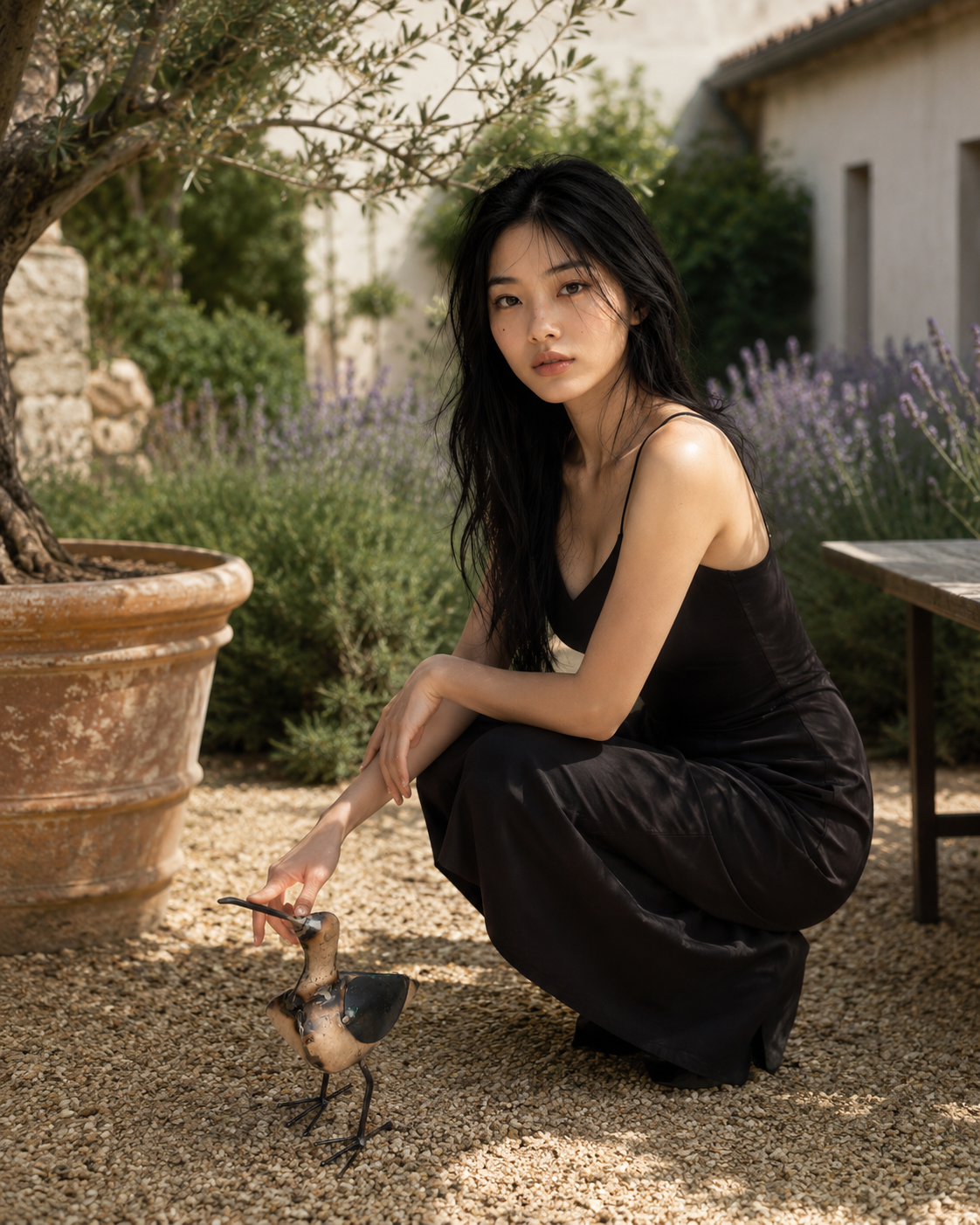
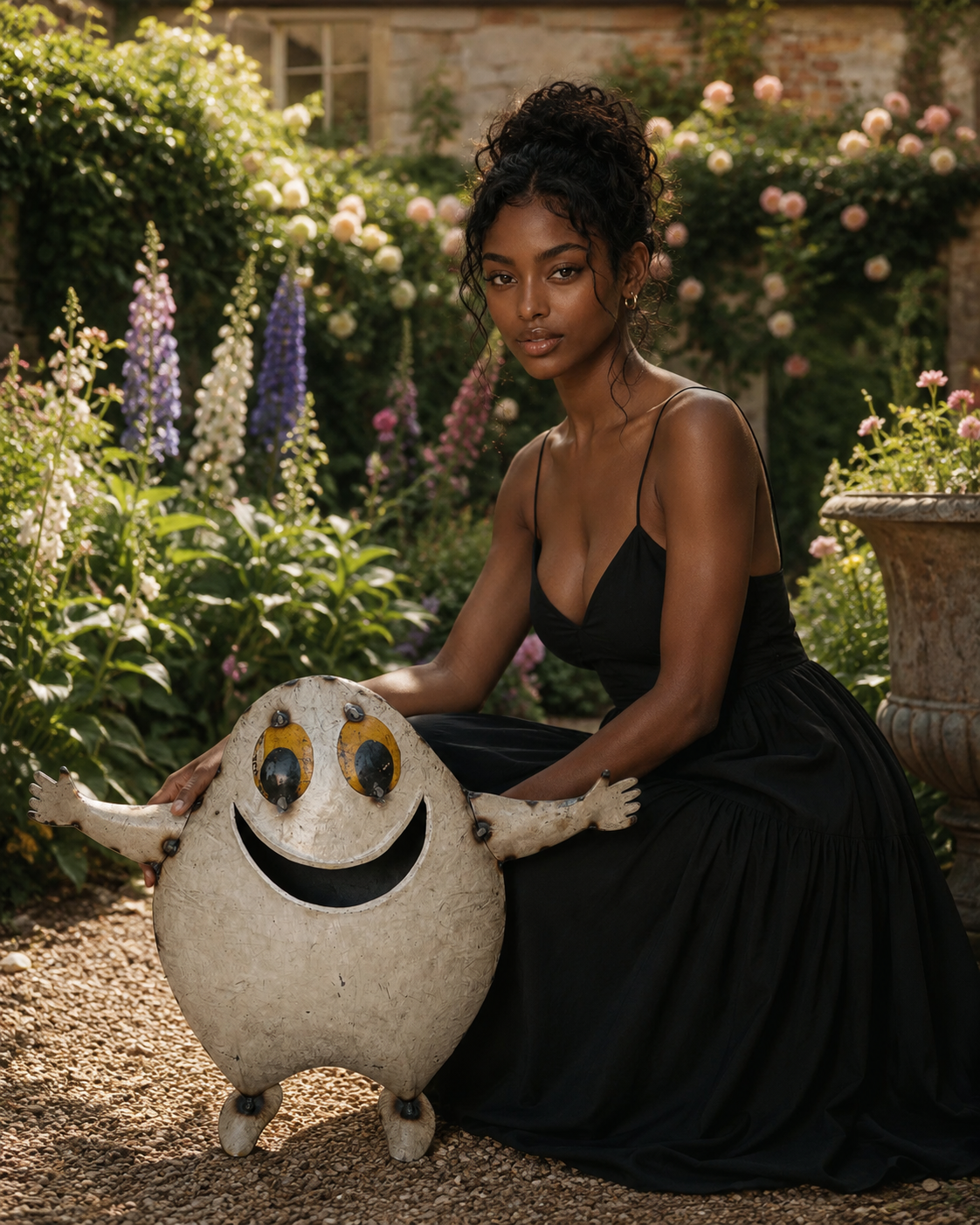
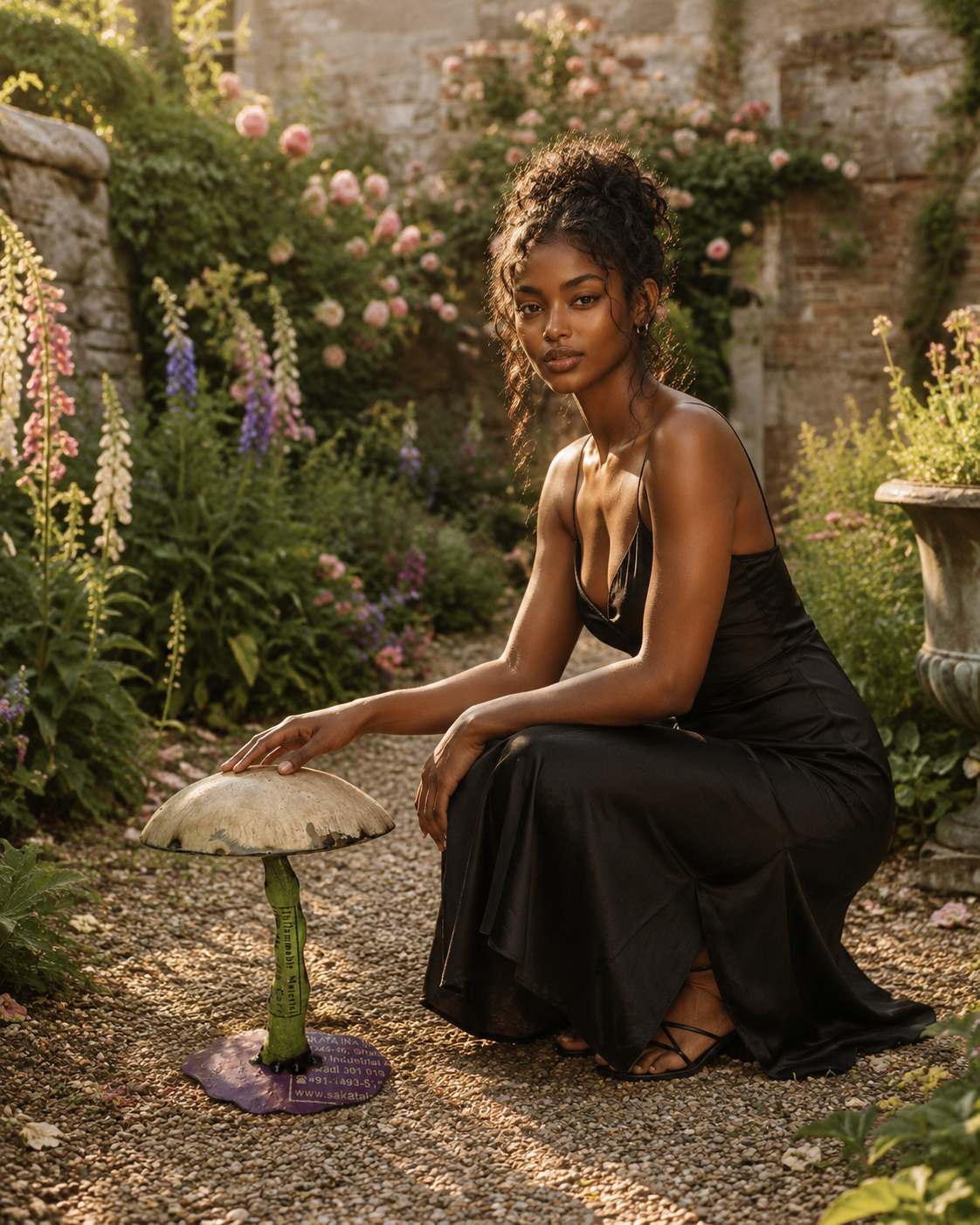
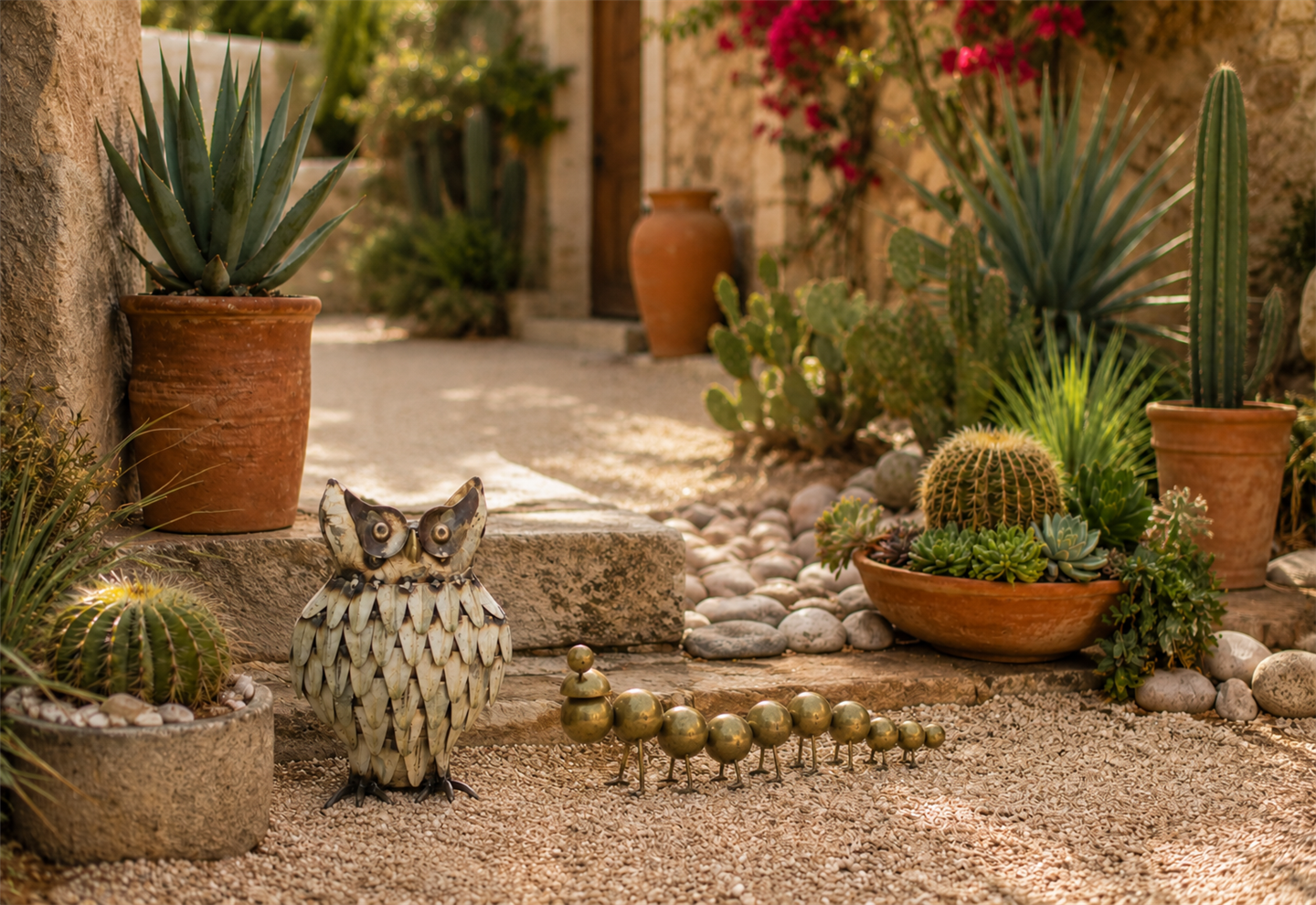
Cactus Garden Decor Ideas: 15 Desert-Inspired Outdoor Styling Ideas
Cactus garden decor can bring bold shape, warmth and sculptural character to an outdoor space.
A weathered metal cactus beside gravel, a terracotta planter with hardy succulents, an agave-shaped sculpture at the end of a path or a cactus wall accent above a patio bench can create a desert-inspired atmosphere without turning the garden into a theme.
The best cactus garden decor is climate-aware. In hot, dry areas, real cacti and desert-adapted plants may form the living structure. In colder, wetter or humid regions, metal cactus art, gravel, terracotta, hardy succulents and locally suitable drought-tolerant plants can create the same visual language more reliably.
TL;DR
- Use cactus decor as one sculptural focal point, not repeated novelty across every corner.
- Match real cactus planting to local climate, winter temperatures and drainage.
- Use metal cactus decor where living cacti are unsuitable or difficult to overwinter.
- Combine one tall form, one rounded form and one softer texture for balance.
- Use gravel, terracotta, stone and weathered metal as supporting materials.
- Keep spiny plants away from paths, seating, doors and children's areas.
- Choose locally appropriate drought-tolerant plants instead of copying a desert planting list from another climate.
- Build a long-term desert-inspired base, then update smaller planters seasonally.
Quick Answer: How Do You Style Cactus Garden Decor?
Start with one cactus-shaped focal feature, such as a metal sculpture, planted cactus container or wall panel. Add related textures such as gravel, terracotta, stone and drought-tolerant planting. Keep open space around the feature, repeat only one or two materials, and use local climate conditions to decide whether real cacti are practical.
What Is Cactus Garden Decor?
Cactus garden decor includes outdoor ornaments, sculptures, planters, wall art, garden stakes and styling elements inspired by cacti, agaves, succulents and desert landscapes.
It may include:
- Metal cactus decor
- Cactus garden ornaments
- Outdoor cactus sculptures
- Cactus-shaped planters
- Desert-inspired patio displays
- Agave-shaped metal garden art
- Cactus wall panels
- Terracotta and gravel planter displays
- Desert garden path accents
- Succulent-inspired outdoor décor
Nearly all cacti are succulents, but not all succulents are cacti. Cacti are one group within the larger collection of water-storing plants commonly called succulents. (UA Cooperative Extension)
Cactus Garden Decor vs a True Desert Garden
A cactus-inspired garden can work almost anywhere. A true cactus garden depends on climate, winter temperatures, drainage, rainfall and suitable plant selection.
In the United States, the USDA Plant Hardiness Zone Map helps gardeners estimate which perennial plants are likely to survive typical winter minimum temperatures. It should be used as a guide rather than a guarantee, because wind, rainfall, drainage and microclimates still matter. (USDA Plant Hardiness Zone Map)
| Garden direction | Best approach |
|---|---|
| Hot, dry climate | Use regionally suitable cacti, succulents, agaves, gravel and water-wise planting |
| Cold winter climate | Use hardy succulents, movable containers and metal cactus sculptures |
| Wet or humid climate | Use cactus-inspired décor with locally suitable drought-tolerant plants |
| Balcony or patio | Use container-grown plants, compact cactus art and vertical features |
| Family garden | Use rounded, non-spiny foliage and metal decor away from active routes |
The University of Arizona notes that cacti and succulents can support lower-water landscape styles in suitable desert climates, while RHS guidance stresses that hardy cacti and succulents still need warm, sunny, sheltered conditions and sharply drained soil. (UA Cooperative Extension)
Why Water-Smart Design Matters
In the United States, residential outdoor water use accounts for nearly 8 billion gallons per day, mainly for landscape irrigation. A carefully designed water-smart landscape can reduce outdoor water use through plant selection, mulching and appropriate irrigation practices. (US EPA)
A cactus-inspired look should not mean forcing desert plants into unsuitable conditions. It should mean choosing a lower-maintenance, climate-aware planting palette and using decorative cactus forms where real cactus planting is impractical.
The Gardenalia CACTUS Method
| Step | Question | What to do |
|---|---|---|
| C — Climate check | Can real cacti survive here? | Check local cold, rainfall, humidity and drainage conditions |
| A — Anchor feature | What is the main statement? | Choose one metal cactus, planted specimen or cactus wall feature |
| C — Contrast | What will make the feature stand out? | Use gravel, pale walls, stone, terracotta or open space |
| T — Texture | What supporting layers are needed? | Add grasses, foliage, stones, bark, sand-toned mulch or low planters |
| U — Use local plants | What can genuinely thrive here? | Choose locally suitable drought-tolerant species |
| S — Safety and spacing | Can people move safely around it? | Keep spiny plants away from walkways, seats and doors |
The Fifth-Season Rule
Before adding cactus outdoor decor, ask:
- Will it still look good when seasonal planting fades?
- Is it suitable for rain, frost, direct sun and wind?
- Is there enough open space around it?
- Does it work from the patio, path or indoor view?
- Can the surrounding plants thrive in the same conditions?
- Would the garden look calmer with one less object?
15 Cactus Garden Decor Ideas
1. Use One Metal Cactus as a Path-End Focal Point
A tall metal cactus sculpture can make a garden path feel intentional.
Place it where a path turns, ends or opens into a patio. Frame it with gravel, low planting or a pale wall behind it. Keep nearby décor simple so the cactus silhouette remains the main feature.
Best for: side gardens, narrow patios and path endings.
2. Pair Metal Agave Art With Rounded Plant Forms
A metal agave sculpture works best when contrasted with softer shapes.
Pair it with rounded planters, low mounding plants, gravel or smooth stones. This prevents the patio from feeling visually sharp or repetitive.
Best for: modern patios, courtyard corners and desert-inspired entryways.
3. Create a Terracotta-and-Gravel Patio Display
Terracotta, gravel and cactus-inspired art can create desert warmth without needing a full in-ground cactus garden.
Use one large terracotta planter, one low bowl, one metal cactus accent and a small gravel surface below the grouping. Keep the palette earthy: clay, sand, charcoal, rust and muted green.
Best for: patios, balconies and covered porches.
4. Add a Cactus Wall Panel Above Planters
A cactus wall feature can add height without consuming patio floor space.
Use one metal cactus panel above a planter group. Add drought-tolerant or climate-suitable foliage below, leaving enough blank wall visible around the art.
Best for: fence-backed patios, shed walls and courtyard gardens.
5. Create a Desert-Inspired Entryway
Use one tall planter at the front entrance, supported by a compact metal cactus sculpture or cactus wall ornament.
Avoid placing real spiny plants close to steps, door swings or narrow entry routes. Use non-spiny structural foliage if the entrance is heavily used.
Best for: front porches, patio doors and garden gates.
6. Use a Three-Texture Gravel Garden Layout
Create a simple layered composition:
- One tall cactus or cactus-shaped sculpture
- One rounded planter or compact shrub
- One softer grass or trailing plant
This gives the space height, mass and movement without requiring many separate ornaments.
Best for: dry-looking borders, gravel gardens and patio edges.
7. Build a Cactus-Inspired Balcony Corner
A balcony cactus garden does not need many pots.
Use one statement planter, one smaller supporting pot and one vertical cactus wall accent. Keep the middle of the balcony open for seating and circulation.
RHS notes that container-grown succulents may need protection in cold weather, including a warm, dry and sheltered location. (RHS)
Best for: apartment balconies and compact terraces.
8. Style a Low Cactus Bowl Near Outdoor Seating
A low bowl planter with compact succulents or dry-climate-style foliage can soften a coffee-table or lounge corner.
Keep the planting low enough that it does not interrupt views across the patio. Use one small decorative cactus element nearby only if it supports the composition.
Best for: lounge patios, outdoor tables and low seating areas.
9. Create a Modern Desert Garden With Negative Space
Modern cactus garden decor often looks strongest when there is less of it.
Use one sculpture, one large planter and one gravel or stone area. Leave open paving or open planting space around them. Avoid filling every corner with cacti, stones and ornaments.
Best for: contemporary courtyards, modern patios and minimalist gardens.
10. Add Cactus Decor to a Raised Planter Edge
A raised planter can support cactus-inspired décor without placing every feature directly on paving.
Use a metal cactus stake, low sculpture or small wall-mounted detail at one end of the planter. Keep the rest of the planter focused on healthy local planting.
Best for: patio borders, decks and garden edges.
11. Use Desert Colours Instead of More Objects
You can create a cactus-inspired garden through colour and texture rather than adding many cactus ornaments.
Try:
- Clay and terracotta
- Warm sand-coloured gravel
- Olive, blue-green and silver foliage
- Rusted or dark metal
- Charcoal planters
- Pale stone
This creates a desert atmosphere without making the space overly themed.
12. Add a Cactus Sculpture Beside a Potting Bench
A compact metal cactus can work as a character detail beside terracotta pots, gardening tools and herbs.
Keep the bench functional. The sculpture should add personality, not take over work space.
Best for: sheds, greenhouse entrances and covered patios.
13. Use Cactus Art in a Cold-Climate Garden
Where winter weather makes real cactus planting difficult, use durable cactus silhouettes, wall art or metal sculptures as the permanent feature.
Then add hardy local grasses, sedums, evergreen structure or seasonal containers around it. RHS recommends sharply draining compost and good drainage for many succulents, while tender types may need winter protection or indoor shelter. (RHS)
Best for: cold-winter patios, wet climates and seasonal outdoor spaces.
14. Create a Desert-Style Garden Corner With Stones and Grasses
A garden corner can look desert-inspired with one metal cactus, one specimen planter, gravel and ornamental grasses.
The grasses add softness and movement. The cactus shape adds height and character. The stone and gravel give the layout a grounded base.
Best for: garden corners, courtyard edges and sunny patios.
15. Use One Cactus Accent as a Gift-Worthy Feature
A handcrafted cactus sculpture, cactus planter or small metal wall feature can make a memorable gift for gardeners and patio owners.
Choose something suitable for the recipient's space:
| Recipient setting | Best cactus décor gift |
|---|---|
| Balcony | Compact cactus wall ornament or planter |
| Patio | Medium metal cactus sculpture |
| Front porch | Cactus planter or tall decorative stake |
| Garden path | Freestanding metal cactus focal piece |
| Cold climate | Decorative cactus art rather than tender living plants |
Real Cactus and Succulent Care: Essential Rules
Choose the Plant for the Climate
Do not assume that a cactus shown in a desert garden image will survive in every location.
Use local nursery guidance, regional plant databases and climate information. In the U.S., use the USDA hardiness zone as an initial filter for perennial survival, then consider rainfall, drainage and exposure. (USDA Plant Hardiness Zone Map)
Prioritise Drainage
Cacti and many succulents need sharply draining compost and containers with drainage holes. Excess moisture around roots can be more damaging than occasional dry conditions. (US Forest Service R&D)
Protect Tender Plants in Winter
Some hardy succulents can remain outdoors with protection, but many tender cacti and agaves require a dry, sheltered or frost-free location during cold weather. (RHS)
Keep Spiny Plants Away From High-Traffic Areas
This is a simple design rule: use spiny cacti as distant focal plants, background features or protected container specimens. Use softer, non-spiny planting near seating, steps and children's spaces.
Cactus Garden Decor Materials Compared
| Material | Best style direction | Best use |
|---|---|---|
| Weathered iron | Rustic, desert, collected | Gravel gardens, path ends and garden corners |
| Powder-coated metal | Bright, modern, playful | Patios, balconies and wall décor |
| Corten-style steel | Architectural and earthy | Modern desert gardens and pale-wall settings |
| Terracotta | Warm, Mediterranean, handmade | Patio planters, herb displays and courtyards |
| Stone or cast stone | Grounded and timeless | Path edges, formal gardens and large patios |
| Ceramic | Colourful and expressive | Covered patios and porch displays |
| Reclaimed metal | Handmade and character-rich | Rustic gardens and potting areas |
Expert Guidance: Desert Style Begins With Planning
University of Arizona Cooperative Extension's Water Wise guidance treats xeriscape as a low-maintenance, water-efficient approach that starts with a base map of the property before planning planting zones, paths, irrigation and features. (UA Cooperative Extension)
For Gardenalia, the takeaway is simple: design the structure first. Add cactus décor after you know where people walk, where water runs, what light is available and what plants can survive.
Case Study: A Water-Wise Planning Model
Arizona Cooperative Extension's Water Wise program teaches residents and landscape professionals about low-water planting, irrigation, rainwater systems and landscape design. Its wider approach combines plant choice, efficient watering and site-specific planning rather than relying on a single decorative style. (UA Cooperative Extension)
Gardenalia application:
- Map the patio, garden path and planting zones.
- Identify full sun, shade, drainage and wind exposure.
- Choose one desert-style focal feature.
- Add locally appropriate planting around it.
- Use gravel, terracotta or stone as supporting materials.
- Keep enough empty space for the feature to stand out.
Cactus Garden Decor Mistakes to Avoid
Copying a Desert Image Without Considering Climate
A desert look can travel globally. Desert plants cannot always do the same.
Using Too Many Cactus Ornaments
One cactus sculpture has more impact than several scattered pieces.
Forgetting Drainage in Succulent Containers
Cactus and succulent containers need proper drainage and a suitable growing mix. (RHS)
Planting Spiny Cacti Beside Seating
Keep sharp plants away from paths, patios, doors and areas used by children or pets.
Treating Gravel as a Substitute for Planting Design
Gravel can support a desert-inspired aesthetic, but it should be paired with intentional planting, structure and local climate suitability.
Using High-Water Plants Beside Low-Water Plants
Group plants with similar water needs. This makes irrigation and maintenance simpler and helps plants perform more reliably.
Cactus Garden Decor Checklist
Before finalising a cactus-inspired outdoor space, check:
- Is there one clear cactus or agave focal point?
- Are living plants suitable for the local climate?
- Do containers have good drainage?
- Is there enough root room for the chosen plants?
- Are spiny plants away from paths and seating?
- Does the layout retain clear walking space?
- Are materials repeated rather than randomly mixed?
- Will the sculpture or planter work in winter?
- Is water use appropriate for the climate?
- Would the space look calmer with one fewer ornament?
Read more
Transform your outdoor space with decorative garden planters. Discover expert styling ideas, placement tips, and planting secrets to create elegant, functional displays that add beauty, structure, ...
Transform your outdoor space with stunning Christmas Garden decorations. Discover elegant styling ideas, festive lighting tips, and timeless design secrets to create a magical, welcoming display th...